Prostate Health · Care Path 02 — Prostate Cancer
Focal Therapy for Prostate Cancer: Treating Part of the Gland
Between watching a prostate cancer and treating the whole gland, there is a third question: can we treat just the part that needs it? For carefully selected men, the answer is yes. Here is an honest look at who those men are.

If you have recently been diagnosed with prostate cancer, you have probably been shown two doors. Behind one is whole-gland treatment — surgery to remove the prostate, or radiation to treat all of it. Behind the other is active surveillance — no treatment now, and careful watching. Focal therapy, also called focal ablation, is the question in between: if the cancer occupies one part of the prostate, can we destroy that part and leave the rest of the gland, and the nerves beside it, alone?
The appeal is obvious. The prostate sits against the nerves that control erections and beneath the muscles that control urine. Whole-gland treatment puts all of that in the treatment field, which is why erectile and urinary side effects are its best-known costs. Focal therapy exists to shrink the treatment field — to trade some of that risk away by treating less.
The honest part is what this page is for: focal therapy only makes sense for some cancers, and the evidence behind it is younger than the evidence behind surgery and radiation. Both of those sentences matter. A clinic that tells you only the first is selling; a page that told you only the second would be hiding an option that, for the right man, is a genuinely reasonable choice.
One more thing, because many men reach this page searching for an “alternative prostate cancer treatment”: focal therapy is an alternative to whole-gland surgery and radiation — it is not alternative medicine. It uses the same MRI, the same targeted biopsy, and the same operating-room technology as the rest of modern urology, aimed at less of the gland. If what you are looking for is a way to treat cancer with supplements or diet instead of medicine, we will be straight with you: no such treatment has been shown to control prostate cancer.
Where it sits
Three rungs on one ladder
Think of localized prostate cancer treatment as a ladder of intensity. Each rung is right for a different cancer — the ladder is a map, not a ranking.
-
Active surveillance
No treatment now. Regular PSA tests, examinations and scheduled biopsies, with treatment held in reserve. The right rung when the cancer is small and slow enough that treating it would cost more than watching it.
-
Focal therapy
Treat the area of the gland where significant cancer lives; spare the rest. The newest rung, with the youngest evidence — and surveillance of the untreated gland continues afterward. This page.
-
Whole-gland treatment
Surgery removes the prostate; radiation treats all of it in place. The most studied rung, with decades of outcome data — and the right one when cancer is too widespread or too aggressive for anything less.
Which rung is yours is decided by the map of your cancer — stage, grade, and where it sits in the gland — not by which rung sounds best. Building that map is what the diagnosis process is for.
The part most pages leave out
What focal therapy has not yet proven
Focal therapy is genuinely promising, and it is genuinely less proven than the alternatives. Here is that sentence unpacked, because you will not find it unpacked on most pages about this treatment.
The guideline calls it investigational — and asks us to tell you so
The American Urological Association and ASTRO, in their joint guideline on localized prostate cancer, direct clinicians to inform patients that whole-gland or focal ablation remains investigational without high-quality data comparing ablation outcomes to standard-of-care therapies such as surgery, radiation and active surveillance. For high-risk cancer, the guideline says ablation should not be recommended at all outside a clinical trial. A 2025 systematic review of fifty prospective studies puts it similarly: focal therapies are recommended within registries or trials rather than as settled standard care.
We are telling you that on our own page about the treatment, before you ever sit down, because the alternative is letting you discover it later.
Prostate cancer is often multifocal
Unlike a single lump in a breast, prostate cancer frequently exists in more than one place in the gland, and MRI — good as it is — does not see everything. Focal therapy bets that the significant disease is where the imaging and biopsy say it is, and that anything left behind is the kind best watched rather than treated. For well-selected men that is a reasonable bet. It is also exactly why selection is everything, and why the untreated gland is never simply declared cured.
Treated is not done
After focal therapy you still have a prostate — which means you still have surveillance: PSA testing on a schedule, MRI, and repeat biopsy when anything moves. Your PSA will not fall the way it does after the whole gland is removed, so interpreting it takes judgment and continuity of care. And a second treatment — further ablation, or whole-gland surgery or radiation — is a real possibility we plan for from the start, rather than a failure sprung on you later.
First-line treatment and salvage are different conversations
Ablation as the first treatment for a newly diagnosed cancer, and ablation to rescue a cancer that has returned after radiation, carry different evidence and different risks. Dr. Robbins performs both, and which one applies to you changes the discussion substantially — so we have it explicitly rather than letting one stand in for the other.
If, after all of that, focal therapy still fits your cancer — and the next section is about whether it does — it is not a consolation prize or a compromise. It is a deliberate choice to match the size of the treatment to the size of the problem.
Candidacy
Who focal therapy suits — and who it doesn’t
Selection is not the fine print of focal therapy. It is the treatment. Everything focal therapy promises depends on choosing the right cancer to treat this way.
It tends to fit when…
- The cancer is confined to the prostate, with no evidence it has spread beyond the gland
- It is concentrated in one region that MRI can see and a targeted biopsy has confirmed — a mapped target, not a guess
- It is significant enough to need treating, but not so extensive or aggressive that anything less than whole-gland treatment would be dishonest
- The tumor sits where the energy can reach it with a margin — an anatomy question your imaging answers
- You understand the deal and want it: function protected now, in exchange for committed surveillance and the honest possibility of a second treatment later
It is the wrong tool when…
- Cancer is found throughout the gland, or on both sides in significant volume. Treating half the problem is not a treatment
- The cancer has spread beyond the prostate — a different situation with different options, covered on our prostate cancer page
- The cancer is low-risk enough that surveillance alone is the wiser move. Ablating a cancer that never needed treating still carries the procedure’s risks
- What you want is maximum certainty in a single procedure, and the untreated remainder of the gland would keep you up at night. That is a legitimate temperament, not a flaw — and an honest reason to have the surgery conversation instead
- You cannot, or will not, commit to the follow-up schedule. Focal therapy without surveillance is not a smaller treatment; it is an unfinished one
A clinic where every man turns out to be a candidate is not selecting. It is selling.
How we deliver it
Focal therapy here means focal cryoablation
“Focal therapy” names a strategy, not a machine, and more than one energy source can carry it out. In this practice the focal work is done with cryoablation — freezing. That distinction is worth stating plainly, because both of the ablation technologies we offer are sometimes described loosely as “focal.”
Cryoablation — the focal option
Thin probes are placed into the prostate under ultrasound guidance, and argon gas forms a precisely shaped ball of ice around the target tissue while a warming catheter protects the urethra. When the disease is confined to one region, the freeze can be limited to that region rather than the whole gland — which is what makes cryoablation the technology we use when focal treatment is the right call. How the procedure works, what recovery looks like and its role after failed radiation are covered on our cryotherapy page.
HIFU — offered here as whole-gland treatment
High-intensity focused ultrasound concentrates sound waves to heat and destroy prostate tissue with no incision. Dr. Robbins offers HIFU to selected patients, but as a whole-gland treatment rather than a focal one — so if you have read that HIFU can be delivered focally elsewhere, that is true of the technology and not of how it is used here. Sonablate, the system used for prostate HIFU, is FDA-cleared for the ablation of prostate tissue; that is not the same as an approval for the treatment of prostate cancer, and no HIFU system holds such an approval. The device and the procedure are covered on our HIFU page.
Which approach suits which man is an anatomy question, not a ranking. It depends on where the tumor sits, the size and shape of the gland, and your treatment history — a conversation had over your MRI images rather than a menu you order from.
Side by side
Focal therapy beside the alternatives
The same ladder, laid flat. The full menu — including hormonal therapy for cancer beyond the gland — is on the prostate cancer page.
| Approach | What is treated | What it asks of you afterward |
|---|---|---|
| Active surveillance | Nothing yet — the cancer is watched, with treatment held in reserve | Regular PSA testing, examinations and scheduled biopsies, indefinitely |
| Focal therapy (cryoablation) | The region of the gland with significant cancer; the rest is spared | Committed surveillance of the untreated gland, and openness to a second treatment if disease appears or returns |
| Robotic prostatectomy | The entire prostate, removed through five small incisions | Recovery from surgery; PSA monitoring, which is simplest to interpret once the gland is gone |
| Radiation therapy | The entire gland, treated in place — coordinated with radiation oncology | A course of treatment sessions, with long-term follow-up here throughout |
| HIFU | The whole gland, ablated with focused ultrasound — offered here to selected patients | Continued PSA monitoring, since the prostate remains in place |
Already had radiation, and the cancer has returned? That is a different conversation with its own options — our cryotherapy page covers treatment after radiation, and the consultation is where it starts.
Why ask us
What this practice actually offers
Here is why the candidacy answer you get in this office is worth something: we offer every rung of the ladder. Active surveillance is managed here. Robotic prostatectomy is performed by Dr. Robbins. Radiation is coordinated with radiation oncology, with us remaining your urologist throughout. Cryoablation — focal or whole-gland — and HIFU are both performed by Dr. Robbins.
A clinic that owns one machine tends to find that every man is a candidate for that machine. When the same urologist offers the whole ladder, “you are a candidate” and “you are not” are clinical judgments rather than sales positions — and we say both, regularly.
The selection work happens under the same roof as the treatment. The PSA conversation, the MRI review, and the targeted fusion biopsy that maps exactly where your cancer sits — the map focal therapy lives or dies by — are Dr. Robbins’ own workup, not a referral chain with your chart passed along it.
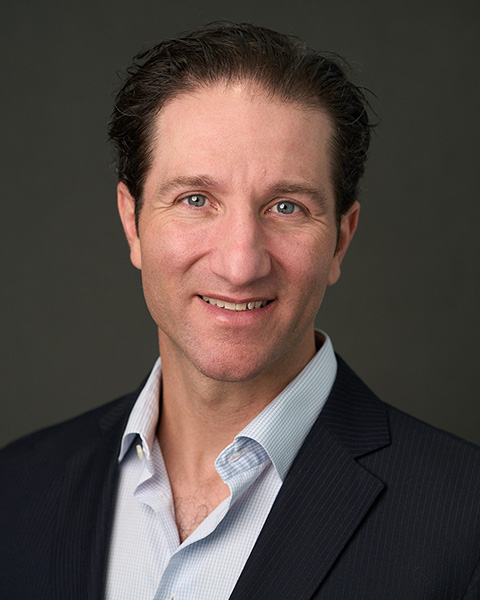
David Robbins, MD is a board-certified urologist and a Diplomate of the American Board of Urology, in practice at Urological Consultants of Florida since 2009 — a practice that has served South Florida for more than four decades. Our office is on Biscayne Boulevard in North Miami, minutes from Aventura.
Common Questions
Frequently Asked Questions
Is focal therapy as effective as surgery or radiation?
Nobody honestly knows yet, and we will not tell you otherwise. The AUA/ASTRO guideline directs clinicians to inform patients that focal ablation remains investigational without high-quality data comparing it against surgery, radiation and active surveillance. Focal therapy’s published results come from shorter follow-up in carefully selected men. For the right cancer it is a reasonable choice; it is not a proven equal.
Will I still need PSA tests afterward?
Yes, and this matters. You still have a prostate, so you still have surveillance: PSA on a schedule, MRI, and repeat biopsy when something changes. Your PSA will not fall the way it does after the whole gland is removed, so interpreting it takes judgment. Focal therapy without follow-up is not a smaller treatment — it is an unfinished one.
What if cancer comes back, or shows up elsewhere in the prostate?
That possibility is planned for from the start rather than treated as a failure. Depending on what returns and where, the options include further ablation, or whole-gland surgery or radiation. We discuss that before treatment, not after, so nothing about it is a surprise.
Is this the same as a lumpectomy for breast cancer?
It is the same idea — treat the disease and spare the organ — and the analogy is useful up to a point. Where it breaks down is that prostate cancer is frequently multifocal: it often exists in more than one place in the gland, and MRI does not see everything. That is why selection matters so much here, and why the untreated part of the gland stays under surveillance.
Do you use cryotherapy or HIFU for focal treatment?
Cryoablation. When focal treatment is the right call, Dr. Robbins performs it by freezing the target region rather than the whole gland. HIFU is offered here as a whole-gland treatment for selected patients. Both technologies are sometimes described loosely as focal, so it is worth being precise about which is which.
Can focal therapy be used if radiation has already failed?
Yes — ablation after failed radiation is a recognized situation, and Dr. Robbins performs it. It is a different proposition from treating a newly diagnosed cancer, with different evidence and different risks, so it is a separate conversation rather than the same one relabeled.
Why would I not just have the whole prostate treated?
For many men that is exactly the right answer, and we will say so. Whole-gland treatment has decades of outcome data and removes the interpretive uncertainty that comes with leaving prostate tissue behind. The trade is that the treatment field includes the nerves and muscles responsible for erections and urinary control. Focal therapy trades certainty for a smaller treatment field. Which trade is right depends on your cancer and on you.
How do I find out whether I am a candidate?
With a map of your cancer: your PSA history, an MRI, and a targeted biopsy showing where the significant disease actually sits. That workup is done here. If focal therapy fits, we will say so — and if it does not, we will tell you that plainly and show you what does.
Contact Us
We’re here to help. Schedule your visit or ask a question today.
No question is too small — and nothing you share here surprises us. Reach out however feels easiest.
- Call(305) 672-4222
- Visit12411 Biscayne Boulevard
North Miami, FL 33181 - HoursMonday–Friday, 9:00 am – 5:00 pm
Your message goes to Dr. Robbins’ own team — you’ll hear back within one business day.
Get More Information
Need us sooner? Call (305) 672-4222.
We’re Here When You Need Us
Our Office
Visit us in North Miami, or call to book your appointment.
North Miami
- Address12411 Biscayne Boulevard
North Miami, FL 33181 - Phone(305) 672-4222
- Fax(305) 944-3624
| Monday – Friday | 9:00 am – 5:00 pm |
| Saturday – Sunday | Closed |

Prostate Cancer Care at UCOFL
In This Section
Associations
Proud Members Of