
Prostate Health · Care Path 01 — Enlarged Prostate (BPH)
GreenLight Laser Enlarged Prostate Treatment in Miami, FL
Dr. David Robbins has taught GreenLight laser surgery to urologists across the United States and Latin America since 2012 — including as faculty at the American Urological Association’s annual meeting — and performs it here in Miami, at Jackson North Medical Center.
 David Robbins, MD — Diplomate, American Board of Urology
- Certified GreenLight instructor, teaching urologists since 2012
- Faculty, AUA Annual Meeting · 2018 & 2022
- Designated by Boston Scientific for GreenLight
- Patients from 9 countries & territories
- Performed at Jackson North Medical Center
Teaching record
Where Dr. Robbins has taught GreenLight
Since 2012 he has taught the procedure to other urologists in their own operating rooms and at the American Urological Association’s annual meeting — and men have traveled to Miami for it from across the Caribbean and Latin America.
- Taught GreenLight: San Francisco (AUA Annual Meeting, 2018), New Orleans (AUA Annual Meeting, 2022), San Juan, Bogotá, Medellín, Cali, Lima and Santiago — and throughout the United States.
- Patients have traveled from: Colombia, El Salvador, Nicaragua, Panama, Uruguay, Trinidad, Jamaica, Puerto Rico and the Bahamas.

Why does this keep happening?
GreenLight Laser Therapy for Enlarged Prostate
If you are reading this at night, you already know the symptoms: the stream that takes its time, the trip to the bathroom that doesn’t quite finish the job, the second and third trip before morning. The cause is usually mechanical. The prostate sits around the urethra like a hand around a hose, and as it enlarges with age the two lobes press inward until the channel is a slit. The bladder works harder, empties less, and wakes you to try again.
GreenLight laser therapy — photoselective vaporization of the prostate, or PVP — is outpatient surgery that removes the obstructing tissue from inside the channel, through the urethra, with no incision. A thin fiber delivers green laser light that vaporizes the tissue and seals small blood vessels as it goes. What remains is a wide channel inside the prostate’s intact outer capsule. Most men go home the same day.
Left alone, obstruction can progress: acute retention (an emergency, and a catheter), bladder stones, infections, blood in the urine, and a bladder muscle that is slowly damaged by years of pushing — damage no prostate procedure fully undoes. That is the honest reason to act before the ER does it for you. It is also why the right first step is an evaluation, not a procedure: size, shape and how the bladder is coping decide which option fits — GreenLight is one of the six treatments we compare.
What the laser changes
A wide channel remains inside the intact outer capsule. The stream is stronger at once; frequency and night-time trips settle over the following weeks.
Illustrative, not to scale. The size of the channel after surgery depends on the size and shape of the prostate; it is not the same for every man. GreenLight treats the obstructing tissue — it does not remove the prostate.
What would this doctor do?
In Dr. Robbins’ words
What I tell men in the consult. The first thing I say is that we are not treating the prostate — we are treating the bladder’s problem with the prostate. The second is that the evaluation decides the procedure, not the other way round. I measure the gland, I look at the shape, I check how well the bladder empties, and only then do I talk about tools.
When I recommend GreenLight. When the gland is average or large, when a man wants the obstruction removed rather than held open or shrunk, when he needs to stay on a blood thinner, when he is in retention or has stones along with the enlargement, or when he simply wants the option with the longest track record behind it that still lets him go home the same day. I have taught this procedure to other urologists since 2012, and I still think the best argument for it is the plainest one: the tissue is gone, the channel is open, and the bladder gets to rest.
When I send a man elsewhere. If keeping normal ejaculation matters to him and his gland is in the range where Rezum or UroLift work, I say so, because GreenLight commonly changes ejaculation and those two were designed to avoid that. If he wants tissue removed and ejaculation preserved, we talk about Aquablation. If his symptoms are mild, I tell him he may not need any of us yet. A surgeon who owns every option has no reason to steer you to the wrong one.
What I will not promise. A number. Men ask for a success rate and I give them the published trial figures, with the trial’s own caveats, and then I tell them how their anatomy compares with the men in it. Anything more precise than that is a guess dressed up as a statistic.

“The evaluation decides the procedure, not the other way round.”
David Robbins, MD
How it works
GreenLight Laser Technology
The GreenLight system delivers laser light at a wavelength of 532 nanometers — green — through a fiber passed down the camera into the urethra. Hemoglobin, the red pigment in blood, absorbs that wavelength strongly and water barely at all, so the energy goes into the prostate tissue rather than the saline around it. Where the beam lands the tissue is converted to vapor and carried away by continuous irrigation; underneath, a layer less than a millimeter deep is coagulated at the same time, sealing small vessels as the tissue goes. That sealing is why GreenLight is one of the three procedures the American Urological Association names for men at higher risk of bleeding, and why most men need only a short catheter.
How the laser works
Three things happen at once where the beam lands: the tissue vaporizes, the vapor is washed out, and the surface underneath is sealed.
Mechanism as described in the AUA guideline on LUTS/BPH (2023 amendment): 532 nm, preferential absorption by hemoglobin, vaporization with a thin layer of coagulation, saline irrigation; depth of penetration about 0.8 mm. “Virtually bloodless” is not a claim this page makes — bleeding is less likely, not impossible.
Because the procedure runs in saline rather than the glycine solution a traditional TURP requires, it reduces the risk of the fluid-absorption problem (“TUR syndrome”) that limits how long a TURP can safely continue — one reason the procedure can continue longer on a larger gland.
GreenLight XPS. Dr. Robbins operates the current system, the 180-watt GreenLight XPS with the MoXy fiber; the earlier HPS ran at 120 watts. The AUA guideline says clinicians performing PVP should use the 120 W or 180 W platforms.
Is it right for me?
Who GreenLight suits — and who it doesn’t
It tends to fit men with an average or large prostate who want the obstruction removed rather than held open; men who need to stay on a blood thinner or antiplatelet; men in urinary retention, or with bladder stones alongside the enlargement; men who want the tissue removed in a procedure that usually means going home the same day.
It may be the wrong tool when keeping normal ejaculation is a priority and the gland is in the 30–80 g range where office options exist; when symptoms are mild and medication or watchful waiting is reasonable; sometimes when the gland is very large (over 150 g) — the guideline notes PVP may be less effective in larger prostates and names size-independent alternatives, so that is decided case by case; and when there is prostate cancer, an active urinary infection or a severe urethral stricture, which the manufacturer lists as contraindications.
What men weigh, honestly
- For: no incision, usually home the same day, short catheter time in trials, an option for men who must stay on anticoagulation, and the tissue is removed — which held up as well as TURP in a two-year randomized trial.
- Against: retrograde ejaculation is common and usually permanent; burning and urgency for a week or two; some blood in the urine; a re-treatment rate that rises with gland size; general anesthesia; and no tissue specimen for pathology, because vaporized tissue cannot be examined.
What the AUA guideline says, for a man like this
Four things narrow the field faster than any brochure: how big the prostate is, whether you need to stay on a blood thinner, how much ejaculation matters to you, and whether you want an office procedure or a hospital one. Change any of them and read what the guideline says about each option.
-
GreenLight laser
Hospital, general anesthesia · usually home the same day -
Aquablation
Hospital, general anesthesia -
Rezum
Our office, local anesthesia -
UroLift
Our office, local anesthesia
| Procedure | Guideline statement |
|---|---|
| GreenLight (PVP) | “PVP should be offered as an option using 120W or 180W platforms” (Statement 33, Moderate Recommendation). PVP is one of three procedures that “should be considered as treatment options in patients who are at higher risk of bleeding” (Statement 43, Expert Opinion). The Panel adds that PVP “may be less efficacious for larger volume prostates”. In one randomized trial of 80–150 g glands, PVP had “a retreatment rate of 27% at three years”. |
| Aquablation (robotic waterjet) | “May be offered … provided prostate volume 30-80g” (Statement 39, Conditional Recommendation). |
| Rezum (water vapor thermal therapy) | “Should be considered … provided prostate volume 30-80g” (Statement 36, Moderate Recommendation). “May be offered … to eligible patients who desire preservation of erectile and ejaculatory function” (Statement 37, Conditional Recommendation). |
| UroLift (prostatic urethral lift) | “Should be considered … provided prostate volume 30-80g and verified absence of an obstructive middle lobe” (Statement 34, Moderate Recommendation). “May be offered … to eligible patients who desire preservation of erectile and ejaculatory function” (Statement 35, Conditional Recommendation). |
| Also named | Laser enucleation (HoLEP or ThuLEP): “should be considered as an option … as prostate size-independent options” (Statement 38, Moderate Recommendation). Prostate artery embolization: “may be offered … should be performed by clinicians trained in this interventional radiology procedure” (Statement 40, Conditional Recommendation). TURP, TUIP and simple prostatectomy are also guideline options. |
This reads the AUA guideline back to you; it does not examine you. Prostate size is measured, not guessed, and a middle lobe, bladder stones, retention or prior surgery can change the answer. Statements are quoted from the AUA guideline on LUTS attributed to BPH, 2023 amendment (Sandhu et al., J Urol 2024). The AUA published a new BPH guideline in 2026; its surgical statements will replace these once verified word for word.
Logic, not adjectives
What the trials found
-
GOLIATH · Bachmann 2014, Thomas 2016
Non-inferior to TURP
In the GOLIATH randomized trial (281 men, 29 centers in nine European countries), GreenLight XPS was non-inferior to TURP for symptom score and flow at six months, and that held at two years.
-
GOLIATH · Bachmann 2014
Shorter catheter and stay
Time to stable health, length of catheterization and length of hospital stay were all shorter after GreenLight XPS than after TURP.
-
GOLIATH · Thomas 2016
83.6% vs 78.9%
Men complication-free through 24 months, GreenLight XPS vs TURP. Re-treatment rates were comparable at one year, and very few men in either arm needed re-treatment in the second.
-
AUA guideline · 2023 amendment
The guideline’s words
“PVP should be offered as an option using 120W or 180W platforms” (Moderate Recommendation), and “HoLEP, PVP, and ThuLEP should be considered as treatment options in patients who are at higher risk of bleeding.” Statements 33 and 43.
GOLIATH enrolled prostates under 80 g; for 80–150 g glands the AUA cites a trial with a 27% PVP re-treatment rate at three years. Trial figures describe those groups, not any individual. Sources: Bachmann et al., Eur Urol 2014 (PMID 24331152); Thomas et al., Eur Urol 2016 (PMID 26283011); AUA Guideline Amendment 2023, Sandhu et al., J Urol 2024 (PMID 37706750).
The AUA published a new guideline on BPH in 2026 (Part III, surgical management, J Urol 2026); the statements above are quoted from the 2023 amendment, which we have verified word for word.
Who would be doing this?
David Robbins, MD Leads International Courses for Boston Scientific Teaching GreenLight Laser Surgery for Enlarged Prostate
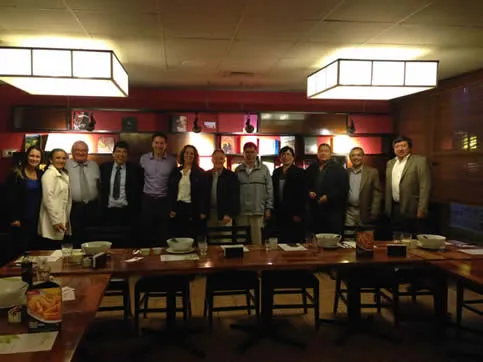
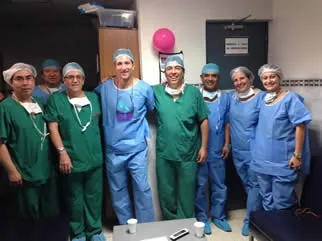
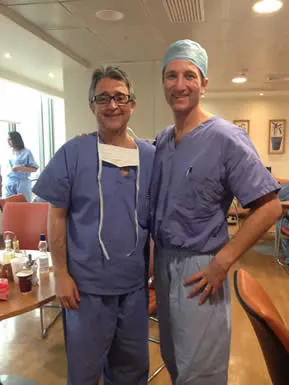
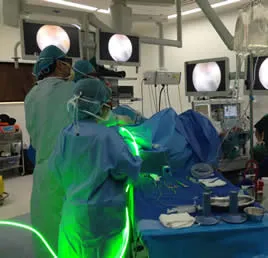
Dr. Robbins is a certified instructor for GreenLight laser. Since 2012 he has taught the technique to other urologists across the United States and abroad — in Puerto Rico, and in Lima, Santiago, Cali, Medellín and Bogotá — with live surgical demonstrations and lectures, and he led a surgical-technique course at the American Urological Association annual meeting in San Francisco in 2018. He contributed to Boston Scientific’s GreenLight teaching curriculum and pre-operative workup recommendations. He is a member of the Boston Scientific Strategic Advisory Board for BPH.
The cases other urologists send him are the ones this page is honest about: glands over 150 g, men in retention, obstruction with bladder stones, and men who must stay on blood thinners. When you choose a surgeon for an enlarged prostate, experience does matter.
Read more: teaching GreenLight in Peru and Chile, July 2015 · teaching GreenLight in Colombia · Dr. Robbins’ biography.
Can I trust him with this?
Facts you can check
Not adjectives — facts you can check.
- Board-certified urologist, and a Diplomate of the American Board of Urology (certification ID 17502).
- Florida medical license ME103781.
- NPI 1588848683.
- In practice at Urological Consultants of Florida since 2009; the practice was founded in 1982.
- Teaching GreenLight internationally since 2012 — see Peru and Chile and Colombia.
- Performs GreenLight at Jackson North Medical Center, a hospital — never in the office.
- Manufacturer designation — set out below, with its conferrer, date and scope.
In their own words
GreenLight Patient Testimonials
“Dear Dr. Robbins - I just wanted to take a moment to thank you for such a positive experience this past week when my husband had surgery to remove his bladder stones and treat his enlarged prostate. We dreaded the whole thing and had postponed the inevitable long past the time when he should have dealt with it.”
A patient’s wife
“Wish I done it sooner. The anticipation was way worse than the reality of the surgery.”
GreenLight patient
“Le escribo desde Uruguay para contarle que la evolución de la cirugía ha sido muy satisfactoria. He mejorado mucho los síntomas previos y siento que sigue mejorando. Aprovecho para darle nuevamente las gracias, no solo por su calidad técnica, sino también por habernos hecho sentir en todo momento muy tranquilos y contenidos.”
(Writing from Uruguay, the patient reports his symptoms improved markedly and continue to improve, and thanks Dr. Robbins for his technical skill and for keeping the family calm and supported throughout.)
One patient’s story
A patient who had relied on intermittent self-catheterization five times a day for about 24 years — and had been told he would probably do so for the rest of his life — no longer needs to after GreenLight laser vaporization of the prostate. He tells it himself in the video.
That is one patient’s outcome, not a typical one, and we describe it here because it is true rather than because it is representative.
Individual results may vary. These are individual patients’ experiences in their own words, shared with their permission. They are not a prediction of your own result.
What happens to me
Patient Expectations After GreenLight Laser for Enlarged Prostate
GreenLight is performed at Jackson North Medical Center under general anesthesia, through the urethra, with no incision. Afterwards a catheter drains the bladder. Most men go home the same day; some stay overnight. The catheter typically comes out in 1–3 days; larger prostates sometimes keep it longer. Once it is out, most men notice the stronger stream at once. Burning with urination, urgency and frequency are common for a week or two while the treated surface heals, and some blood in the urine is normal. The night-time trips fade more slowly, as the bladder learns it no longer has to fight. Follow-up at about three months checks your symptom score, flow and emptying.
Typical timings, which your surgeon confirms at follow-up:
- Desk work: after 3–5 days (1–3 days if you work from home).
- Driving: after 2–5 days.
- Exercise and lifting: after 2–4 weeks.
- Sex: after 2–4 weeks.
What to expect, and when
Day 0 — the procedure
- Day 0 — the procedure
- At Jackson North Medical Center, under general anesthesia, through the urethra — no incision. Most men go home the same day with a catheter draining the bladder; some stay overnight.
- Days 1 to 3 — the catheter comes out
- The catheter typically comes out in 1–3 days; larger prostates sometimes keep it longer. Most men notice the stronger stream once it is out.
- Days 2 to 5 — driving and desk work
- Driving typically resumes after 2–5 days, and desk work after 3–5 days (1–3 days if you work from home).
- Weeks 1 to 2 — burning and urgency
- Burning with urination, urgency and frequency are common for a week or two while the treated surface heals. Some blood in the urine is normal.
- Weeks 2 to 4 — exercise, lifting and sex
- Exercise, lifting and sex typically resume after 2–4 weeks. The night-time trips fade more slowly than the stream improves, as the bladder learns it no longer has to fight.
- Month 3 — follow-up
- A follow-up visit at about three months: symptom score, flow test, and a check that the bladder empties. Retrograde ejaculation (dry orgasm), if it has happened, is usually permanent — which is why it is discussed before surgery, not after.
Typical ranges for an uncomplicated case; your surgeon confirms your own timings at follow-up, and his instructions for you override anything here. Catheter time depends on the size of the prostate and on how you void.
What can go wrong
Every surgery carries risk, and the honest list is the manufacturer’s own:
- Irritative symptoms — burning, urgency, frequency.
- Blood in the urine.
- Urinary tract infection.
- Urinary retention needing a catheter for longer.
- Retrograde ejaculation — common, and usually permanent.
- Erectile dysfunction — uncommon; in a 72-man series, erectile scores were unchanged at a year.
- Urinary incontinence — uncommon; in GOLIATH, four men in each arm had unresolved incontinence at 12 months.
- Urethral stricture or bladder-neck contracture.
- Re-treatment — comparable with TURP in GOLIATH; higher in larger glands.
Sources: Boston Scientific’s GreenLight risk information; Bachmann et al., J Urol 2015 (PMID 25219699); Spitzer et al., J Endourol 2010 (PMID 20964486); AUA Guideline Amendment 2023.
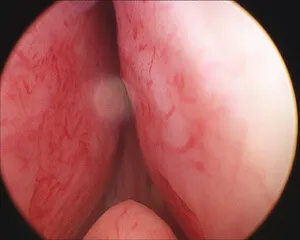
Before
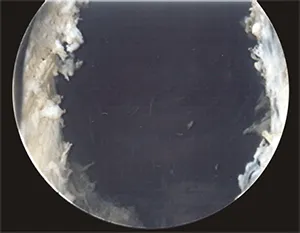
After
The system
GreenLight Laser XPS
Dr. Robbins operates the 180-watt GreenLight XPS with the MoXy fiber — the current GreenLight system, and one of the two platforms, 120 W and 180 W, that the AUA guideline names for PVP. The GreenLight laser system is FDA-cleared through the 510(k) process for vaporization of soft tissue, including photoselective vaporization of the prostate for BPH.
Traveling for surgery
GreenLight Laser XPS International Patient Program
Boston Scientific has owned the GreenLight laser system since acquiring the American Medical Systems urology portfolio in 2015.
Global Patient Care
Patients have traveled to Miami for GreenLight laser surgery with Dr. Robbins from Colombia, El Salvador, Nicaragua, Panama, Uruguay, Trinidad, Jamaica, Puerto Rico, and the Bahamas. Our international GreenLight laser program welcomes patients from all additional regional countries including Brazil, Argentina, Peru, Venezuela, Chile, Ecuador, Bolivia, Paraguay, Guyana, Suriname, French Guiana, Mexico, Honduras, Guatemala, Belize, and Costa Rica.
Out-of-town and international patients: the pre-operative evaluation can usually be coordinated with your home urologist. Please contact us about traveling for surgery before you book your trip, and we will help you plan it.
To request your consultation, please call (305) 672-4222 or contact us online today!
Watch: GreenLight Laser Procedure Animation
An animation of the GreenLight laser procedure, step by step.

Common questions
Frequently Asked Questions
What is GreenLight laser ablation — is it the same as “the GreenLight method”?
Yes. GreenLight laser ablation, photoselective vaporization of the prostate (PVP) and “the GreenLight method” all describe the same procedure: a laser fiber passed through the urethra vaporizes the prostate tissue that is blocking urine flow, sealing small vessels as it goes. It is outpatient surgery with no incision.
Is it blue light or green light?
Green. GreenLight uses a 532-nanometer wavelength, which is green, chosen because hemoglobin absorbs it strongly. “Blue light” is a common mix-up; there is no blue-light prostate procedure.
What are the pros and cons of GreenLight laser surgery?
For: no incision, usually home the same day, a short catheter time in trials, an option for men who must stay on blood thinners, and obstructing tissue actually removed, which in a two-year randomized trial held up as well as TURP. Against: retrograde ejaculation (dry orgasm) is common and usually permanent; burning and urgency for a week or two; some blood in the urine; a re-treatment rate that rises with gland size; and general anesthesia. Whether the balance favors GreenLight for you depends on your prostate’s size and shape and what you want to protect — that is what the evaluation is for.
What is the success rate of GreenLight laser surgery?
The clearest answer comes from the randomized trial: in GOLIATH, GreenLight XPS was non-inferior to TURP for symptom score and flow through two years, with 83.6% of men complication-free at 24 months versus 78.9% after TURP. Those figures describe men with prostates under 80 g; for larger glands (80–150 g) the AUA cites a 27% re-treatment rate at three years. Dr. Robbins will tell you how your anatomy compares with those groups rather than quote you a single number.
How long is recovery after GreenLight?
Most men go home the same day; some stay overnight. The catheter typically comes out in 1–3 days, and most men notice the stronger stream at once. Burning and urgency last one to two weeks. Typical timings: desk work after 3–5 days (1–3 days if you work from home), driving after 2–5 days, and exercise, lifting and sex after 2–4 weeks; night-time symptoms settle over the first weeks, and follow-up is at about three months. Your surgeon confirms your own timings at follow-up.
Does GreenLight affect sex?
Erections usually do not change — in a 72-man series, erectile scores were unchanged a year later. Ejaculation often does: retrograde ejaculation, where semen goes into the bladder rather than out, is common after GreenLight as after TURP, and is usually permanent. It is not harmful to health, but it matters to many men, which is why we discuss it before surgery, not after. If preserving ejaculation is a priority, Rezum, UroLift or Aquablation may fit better. Sex typically resumes after 2–4 weeks.
Can I have GreenLight if I take a blood thinner?
Often, yes. The AUA guideline names PVP among the procedures to consider for men at higher risk of bleeding, and published series describe GreenLight in men who stayed on their antiplatelet or anticoagulant medication, with more minor bleeding and longer catheter time but no more serious bleeding than other men. Whether you stay on, pause or bridge your medication is decided with your cardiologist.
How much does GreenLight laser surgery cost, and does Medicare cover it?
Covered by Medicare and most insurance plans when medically indicated; we verify your benefits before scheduling. Paying yourself? We'll get you a current quote, which depends on the hospital's price.
Is GreenLight FDA-approved, or is the correct word cleared?
The GreenLight laser system is FDA-cleared through the 510(k) process for vaporization of soft tissue, including photoselective vaporization of the prostate for BPH. “Cleared” is the correct word for this class of device; it is not an FDA “approval”.
Where is the procedure done?
At Jackson North Medical Center, a hospital, under general anesthesia — GreenLight is never performed in the office. Your consultation and pre-operative evaluation happen at our North Miami office at 12411 Biscayne Boulevard, a short drive away.
Contact Us
We’re here to help. Schedule your visit or ask a question today.
No question is too small — and nothing you share here surprises us. Reach out however feels easiest.
- Call(305) 672-4222
- Visit12411 Biscayne Boulevard
North Miami, FL 33181 - HoursMonday–Friday, 9:00 am – 5:00 pm

Your message goes to Dr. Robbins’ own team — you’ll hear back within one business day.
Get More Information
Need us sooner? Call (305) 672-4222.
We’re Here When You Need Us
Our Office
Visit us in North Miami, or call to book your appointment.
North Miami
- Address12411 Biscayne Boulevard
North Miami, FL 33181 - Phone(305) 672-4222
- Fax(305) 944-3624
| Monday – Friday | 9:00 am – 5:00 pm |
| Saturday – Sunday | Closed |

Associations
Proud Members Of


